🎙️ Volunteer Guide Story
Kale Mosque
✓
Volunteer guide content approved by an administrator
Located in the Kale neighborhood of Giresun's historical center, the Kale Mosque is one of the city's important architectural and cultural heritage sites dating from the Ottoman period to the present day. This elegant structure, which you will see during your visit, is not only a place of worship but also a historical artifact that sheds light on Giresun's past. The mosque was registered as a cultural heritage site requiring protection on February 14, 1986.
The history of the Kale Mosque dates back to the 19th century. Inscriptions on the building reveal that a mosque previously stood here, and that the first mosque was rebuilt in 1830 by Dizdarzade Emetullah Hanım. The structure we see today was rebuilt in 1911-1912 by Sarı Mahmutoğlu Hacı Mustafa Efendi. Therefore, the mosque is an important historical structure that brings together traces of different periods.
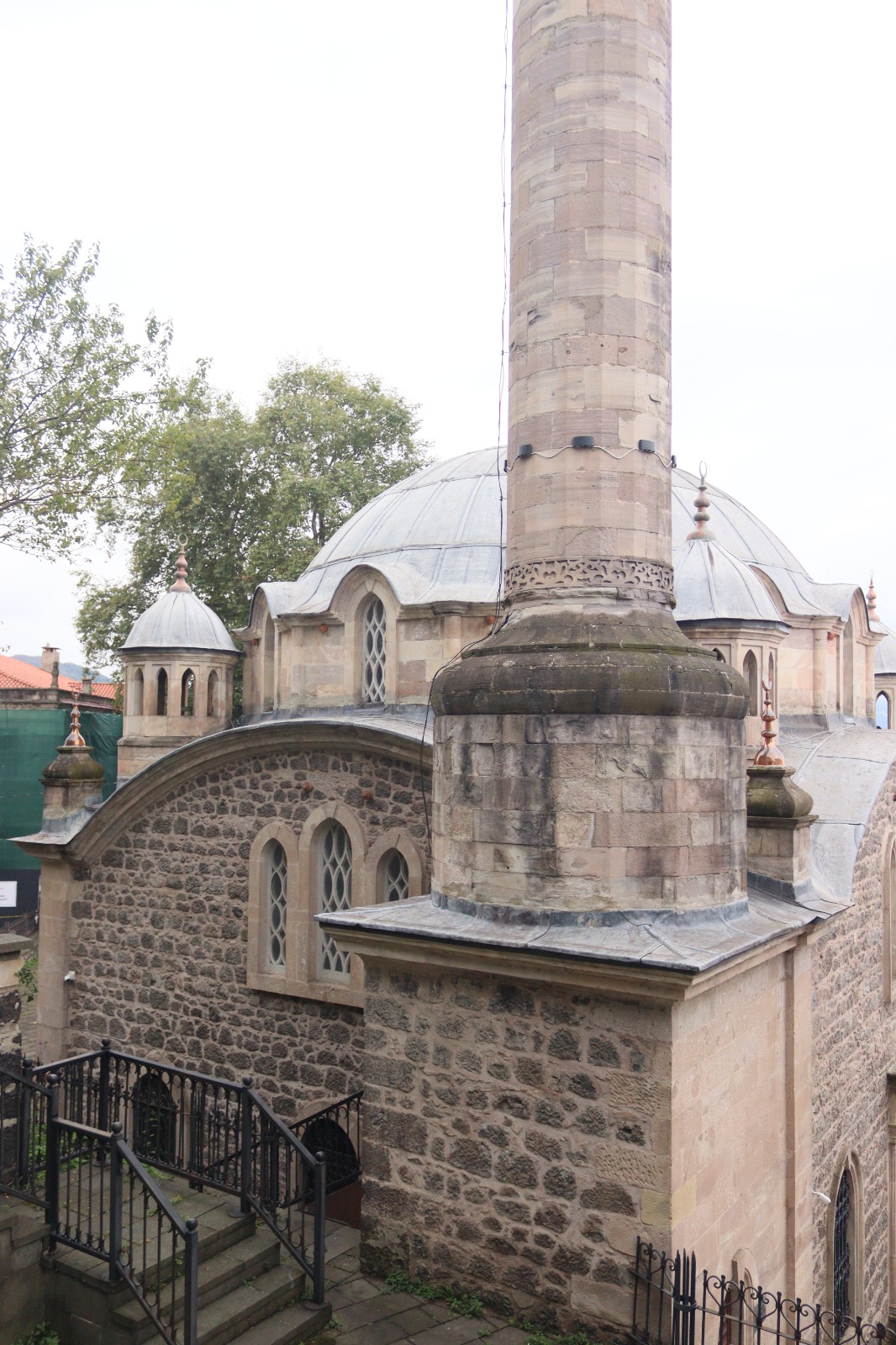
Looking at its architecture, we see that the mosque is designed with a square plan and a single central dome. Cut andesite and basalt stone were used in its construction. The stepped, low-arched eaves on the exterior facade give the mosque a dynamic and unique appearance, while the window arrangements complement the aesthetic features of the structure. The stone minaret rising in the northeast corner has a single balcony and presents a harmonious appearance with the overall architecture of the mosque.
Now, if you pay attention to the entrance of the mosque, you can see two important inscriptions that tell the history of the building. These inscriptions are quite valuable in that they give us direct information about the past of the mosque. While stonework, columns, and decorations stand out at the entrance gate, the interior features various decorations reflecting the late Ottoman architectural understanding. The interior of the central dome features painted decorations, plant and geometric motifs. The mihrab and the wooden minbar are also important elements that complete the historical character of the mosque.
Another striking feature of the Kale Mosque is the coexistence of Western and Baroque influences with Ottoman architecture. The stonework at the entrance gate, the window arrangements, the decorative details on the minaret, and the interior decorations clearly demonstrate this influence. In this respect, the structure is a very valuable example for visitors who want to see the late Ottoman architectural style in Giresun.
While visiting the Kale Mosque, we are actually taking a short journey into Giresun's past. With its stone walls, dome, inscriptions, decorations, and the historical fabric surrounding it, this structure is an important part of the city's cultural identity. For visitors who want to get to know Giresun's history and Ottoman-era urban architecture more closely, the Kale Mosque is a valuable stop that must be seen.
📚 Sources
https://giresun.ktb.gov.tr/TR-396341/kale-camii.html?utm_source
http://kulturportali.gov.tr/turkiye/giresun/gezilecekyer/kale-camii?utm_source